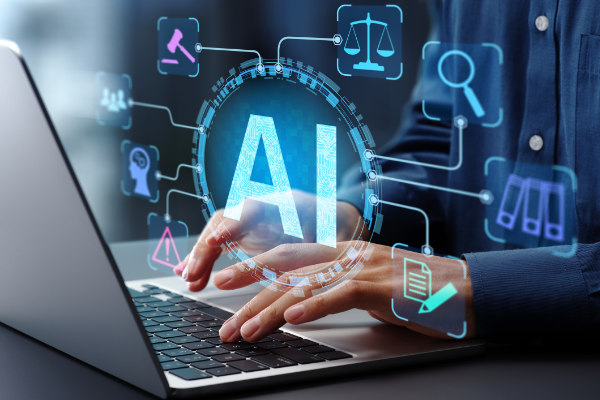
Generative artificial intelligence (AI) tools are rapidly changing the creative process. Fields that use graphic design, video editing, illustration, copywriting, music, writing and coding are adopting AI. And they’re using it for a range of duties, from offloading repetitive tasks to brainstorming.
While AI can reduce barriers, it also poses risks involving intellectual property (IP) and copyright infringement. Media and general liability insurance can cover legal fees in alleged infringement disputes (with limitations).
However, you still bear responsibility for proactively safeguarding your work and maintaining defensible practices in litigation. For now, you’ll need to establish your own protocols around generative AI. Universal best practices will likely take time to develop as case law unfolds.
Generative AI and training data
Generative AI is a branch of AI that uses algorithms and models capable of generating original content like text, images, music, videos, computer code and even complex data structures. Generative AI produces outputs that mimic human-like creation by using patterns, relationships and structures drawn from its training data.
Training data is labeled or unlabeled information that teaches a machine learning model how to recognize patterns, make predictions or generate outputs. These datasets are the foundational input the model learns from.
Copyright and AI
In Canada, the Copyright Act currently only protects works that meet specific criteria, including originality, fixation, and the exercise of skill and judgment — all of which imply human authorship. Works created entirely by generative AI systems and based on simple prompts are unlikely to meet the threshold for “originality” or demonstrate the sufficient skill and judgment required for copyright protection.
The Government of Canada recognizes that the Copyright Act is not well-equipped to address the challenges posed by coauthorship in the age of generative AI. In October 2023, it launched a public consultation titled “Copyright in the Age of Generative Artificial Intelligence,” aiming to balance the needs of creators and creative industries while fostering innovation and competitiveness in AI. The results of this consultation may lead to amendments to the Copyright Act.
The U.S. Copyright Office provides sound advice in the executive summary of its “Copyright and Artificial Intelligence Part 2: Copyrightability” report, which Canadian businesses and individuals seeking to copyright their AI-generated outputs can follow:
- When humans use AI tools to assist them, but they remain the primary creative force, the output may qualify for copyright protection.
- Works entirely created by AI without meaningful human involvement cannot be protected by copyright.
- Whether a human’s contributions to AI-generated outputs are enough to constitute authorship must be determined on a case-by-case basis.
- Prompts alone do not provide sufficient creative human control for copyright authorship.
Human authors are entitled to copyrighted works if their authorship is perceptible in the AI-generated outputs and the creative selection, coordination, or arrangement of materials in the outputs.
Treat AI like any other professional tool. Maintain transparency, compliance and accountability across all your projects. And ask your insurance broker about coverage for the things you can’t prevent.
Neither Canada nor the U.S. has adopted a comprehensive law on AI use. However, if you have an international business, you should familiarize yourself with the comprehensive European Union Artificial Intelligence Act. Use the EU AI Act Compliance Checker to see if it affects your business.
Liability exposures when using generative AI
Here are some of the liabilities to consider and ways to document them so you can defend your position:
Copyright infringement
AI tools train on publicly available datasets, which could contain copyrighted material. If an AI “borrows” recognizable elements from these works, you could unknowingly publish work generated by AI that is closely tied to copyrighted content. Courts continue to debate whether AI usage constitutes “fair dealing” or copyright violation.
Same idea generated by different AI algorithms
Since AI algorithms operate on similar datasets, two users leveraging different AI platforms might generate similar or identical outputs. This could raise questions of originality and ownership.
Intentional versus unintentional infringement
Courts usually examine whether an infringement was intentional (a deliberate use of copyrighted material) or unintentional (a byproduct of AI training datasets). If you have documentation for the process you used, you have a better chance of proving that your wrongdoing was unintentional.
Establishing protocols for using AI tools
To mitigate your liability exposure, document your processes:
Document AI inputs
Record prompts or inputs you use to generate content through AI tools. Save screenshots, text logs or other metadata showing the exact instructions you gave the AI. It might not be practical for every AI interaction, but establishing when a project requires added documentation can help. Thinking through your creative process naturally provides a degree of explainability, which is critical in a dispute.
For example, avoid prompts that explicitly request the recreation of copyrighted or brand-sensitive materials.
So, if you’re using text-to-image AI to create a logo, avoid prompts such as “Generate an image that looks like Nike’s swoosh.” A court might interpret your request as an intent to infringe.
Track AI outputs
Save copies of AI-generated outputs, including version histories. This can demonstrate how the work evolved.
Export metadata or time stamps showing when the AI output was created and who used the system. For example, if you’re developing a cover design using generative AI, having a timeline of the AI’s iterations helps prove originality. It also disproves any impression of copying prior works intentionally.
Have clear records of human contributionsDocument how humans interact with your AI systems, such as edits and refinements. This strengthens evidence of authorship in case any copyright disputes arise.
Establish AI ethical use policies
Establishing standards for integrating AI outputs into creative work reduces ambiguity and aligns with copyright law. Clear documentation also helps ensure AI-assisted works remain eligible for copyright by demonstrating meaningful human control or originality.
Use licensed datasets
Confirm that your AI tool was trained on properly licensed datasets. Many commercial AI platforms explicitly state which datasets they train on. Find another tool if an AI platform can’t or won’t tell you where its data came from.
Review AI-generated work
Review AI-generated work before you publish it. Revise your content if elements appear suspiciously similar to copyrighted material. Use reverse image search tools or text plagiarism checkers to analyze your work for unintentional overlap.
Keep contracts transparent
Use contracts to clarify who has ownership rights and liability associated with AI usage if you have brand partnerships or collaborations. And if your AI creates work for a client, outline who owns the final product and any outputs resulting from collaborations. Also specify who assumes liability for third-party claims. Finally, include contract warranties stating that AI was used and the creator complies with all copyright rules.
Avoid vicarious infringement
If you use social media influencers or paid content creators, make sure they’re not using AI or engaging in copyright infringement in their ads. If one of your influencers posts a video using copyrighted materials, you could be held accountable even though you had nothing to do with their content. A court will evaluate the relationship you have with them. So, if your company benefits from their work (you make a profit) and you have a relationship (you pay them), the law says you share responsibility. Set clear guidelines and check their content for copyright compliance.
Recordkeeping to prove nonintentional infringement
In a court dispute, you’ll need to prove the infringement was unintentional. Having an AI use policy and recordkeeping best practices can be invaluable. These might include:
- AI usage logs that detail every project, including inputs and outputs, metadata, version histories, and time stamps
- Licensing agreements or subscriptions for your AI tools that confirm their dataset compliance policies
- Prompt and output audit files that record AI interactions to show how the content was produced
- Employee training on the ethical use of AI and records of completion
- Insurance coverage
If you use AI and only have a business owners policy, you probably need more protection, like:
Media liability insurance for help with legal fees if you’re faced with an infringement claim. You won’t have to litigate complex IP disputes on your own.
Cyber liability insurance for another layer of protection if your data is breached and you lose sensitive information, especially when using collaborative tools online. If your systems are hacked and IP is stolen, cyber liability may be one of the policies to respond.
General liability insurance to help with some disputes. However, it might not be comprehensive enough for complex litigation.
AI tools add creative value and help manage workloads. However, liability risks can be significant if you’re not prepared.
Treat AI like any other professional tool. Maintain transparency, compliance and accountability across all your projects. And ask your insurance broker about coverage for the things you can’t prevent.


Reliance Insurance supports clients across Canada through a national network of offices and globally through our broker network partners.